
Flat Belt Conveyor
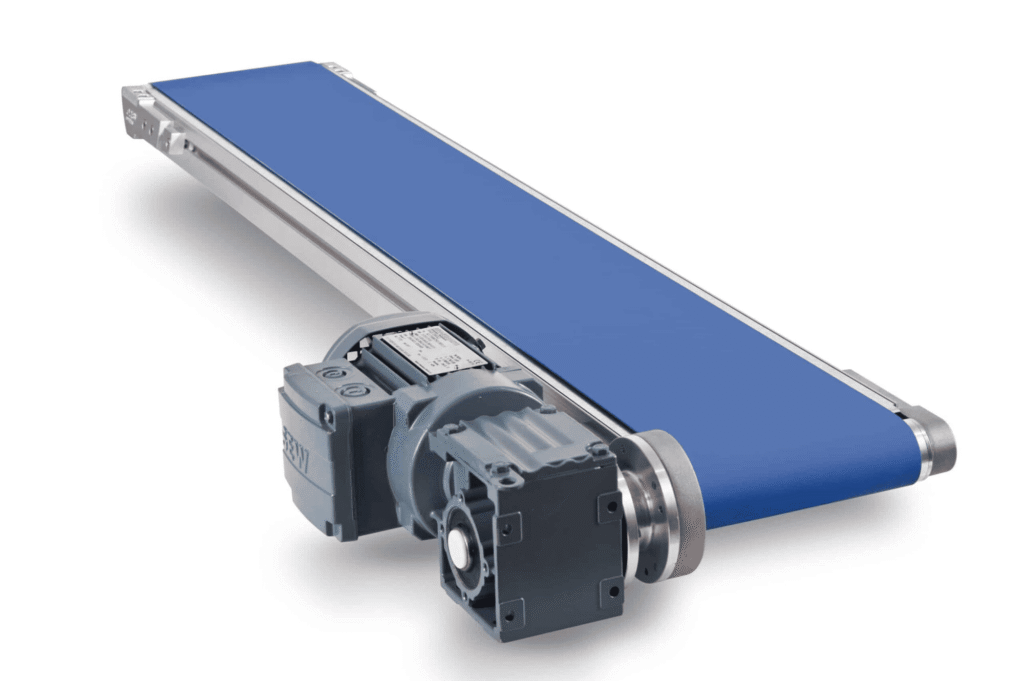
A flat belt conveyor is a continuous conveying device that uses a motor to drive a drum, which in turn drives a circular flat belt in a circular motion. The belt maintains a constant horizontal height throughout its operation, enabling smooth and low-noise material transport.
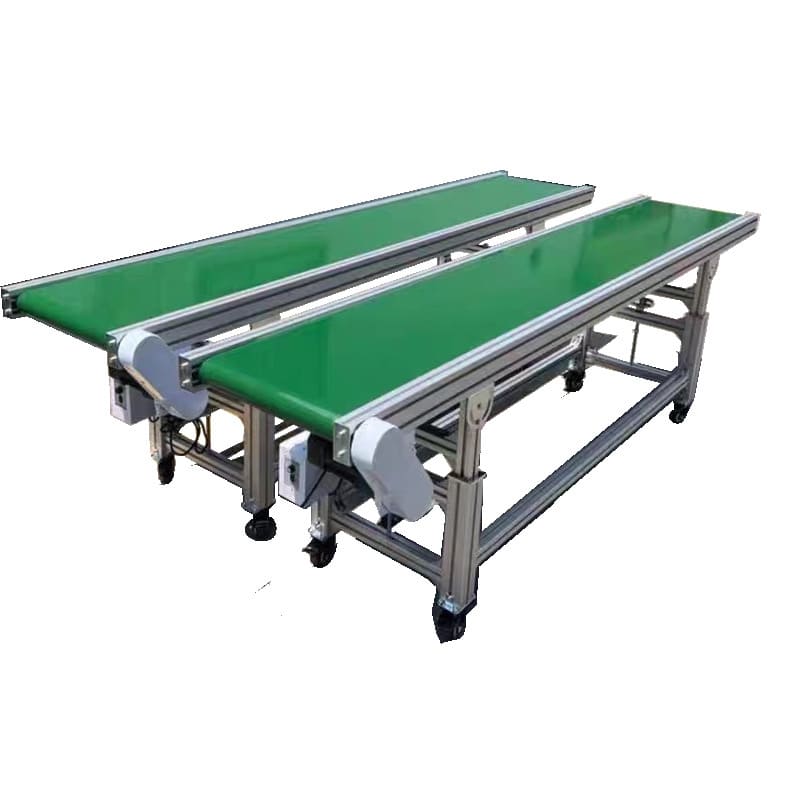
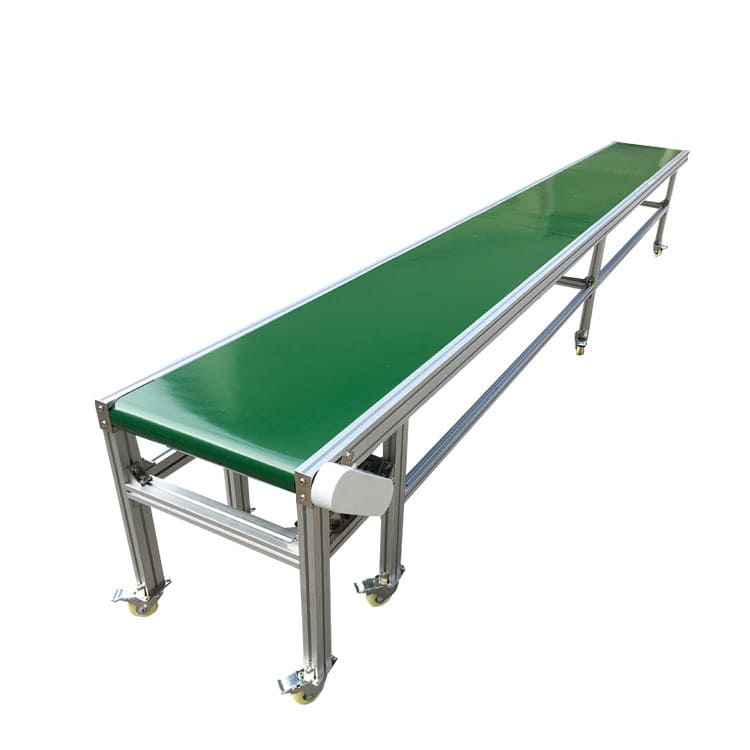
Detailed images:
Features:
- A flat belt conveyor consists of a frame, conveyor belt, drive motor, rollers, and tensioning device. It has a simple structure, is easy to maintain, and has low cost.
- As a continuous planar structure, the flat belt conveyor provides smooth transport and is suitable for most products, such as boxes, bags, and small parts.
- Flat belt conveyors have a wide range of applications and high technological maturity. They are widely used in logistics warehousing, packaging, production lines, and various other industries.
- Flat belt conveyors are well-suited for use in conjunction with other conveying equipment, such as sorting conveyor systems, robots, and inspection lines.
Parameters for Custom Flat Belt Conveyor:
Please provide the following parameters to facilitate our customization of the Flat Belt Conveyor
Products Being Conveyed
First, we need to understand the product being conveyed in order to determine whether the parameters you have provided are appropriate. For example: Does the product contain moisture? Is it food-grade? Is the product a sharp object?
Length, Width and Height
The length, width, and height of the conveying equipment are also of critical importance. These constitute the most fundamental parameters for custom-built conveying systems; therefore, we recommend that you use a tape measure to measure the dimensions of your specific site so that we may provide you with a quotation.
PVC/PU/Rubber
Common conveyor belt materials are PVC and PU. PVC conveyor belts are generally used for conveying ordinary products such as cardboard boxes and clothing. PU is more commonly used for conveying food products. However, PVC conveyor belts are inexpensive and offer better value for money. PU conveyor belts are more expensive than PVC conveyor belts.
Conveyor Frame Material
The frame material for conveyor equipment is generally 301 stainless steel or carbon steel. Stainless steel is typically used in corrosive environments or for food transport applications, and its price is slightly higher than carbon steel. Carbon steel frame conveyor equipment is generally used for transporting ordinary products or in applications without special requirements.
Conveyor belt running speed
The operating speed of the conveyor belt depends on the production volume; higher production volumes generally require higher speeds. Under normal circumstances, the speed is about 8 meters per minute. Of course, a frequency converter can be installed to make it easier to adjust the operating speed.
Voltage
Please provide your local power supply specifications, including voltage, whether it is single-phase or three-phase, and the frequency. Common industrial voltages are 220V, 380V, 400V, 415V, and 440V, with frequencies of 50Hz or 60Hz. We will configure the motor and electrical components according to your local power supply conditions.
Application scenarios
After understanding all the parameters above, there shouldn’t be any problems. However, to ensure everything goes smoothly, we suggest you take some photos or videos of the scene and send them to us so we can have a more comprehensive understanding.
Other configurations:
Guardrails
Guardrails can be installed on both sides of the conveyor belt to prevent the risk of items falling.
Raise feet
Lifting feet can be installed to facilitate short-distance lifting of the flat belt conveyor, typically within 50 centimeters.
Common Parameters for Flat Belt Conveyors::
| Parameter | Specification |
|---|---|
| Belt Width | 100mm – 1000mm |
| Height | 600mm – 2000mm |
| Length | 1m – 20m |
| Frame Material | Stainless Steel 304 / Carbon Steel |
| Belt Speed | 1 – 20 m/min |
| Voltage | Customizable based on your local voltage. |
Drawing:
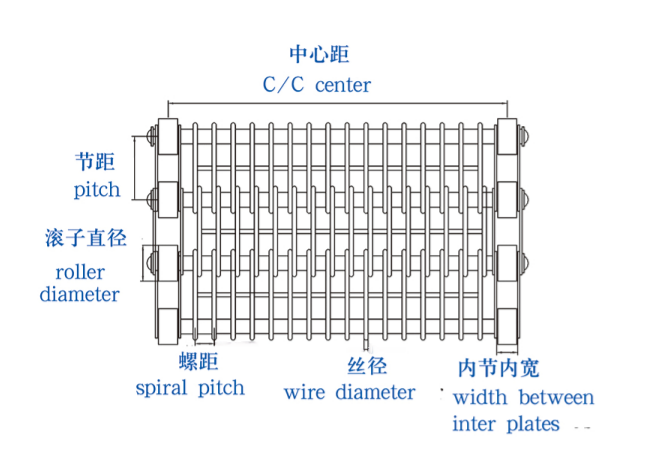
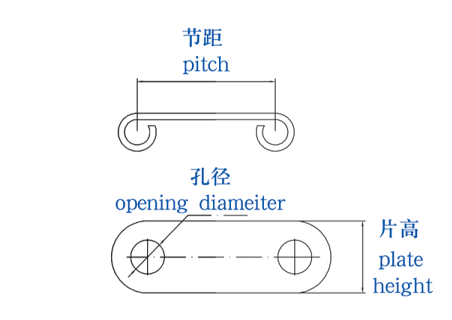
Note: Customization is available based on the parameters shown in the diagram above.
Application Scenarios:
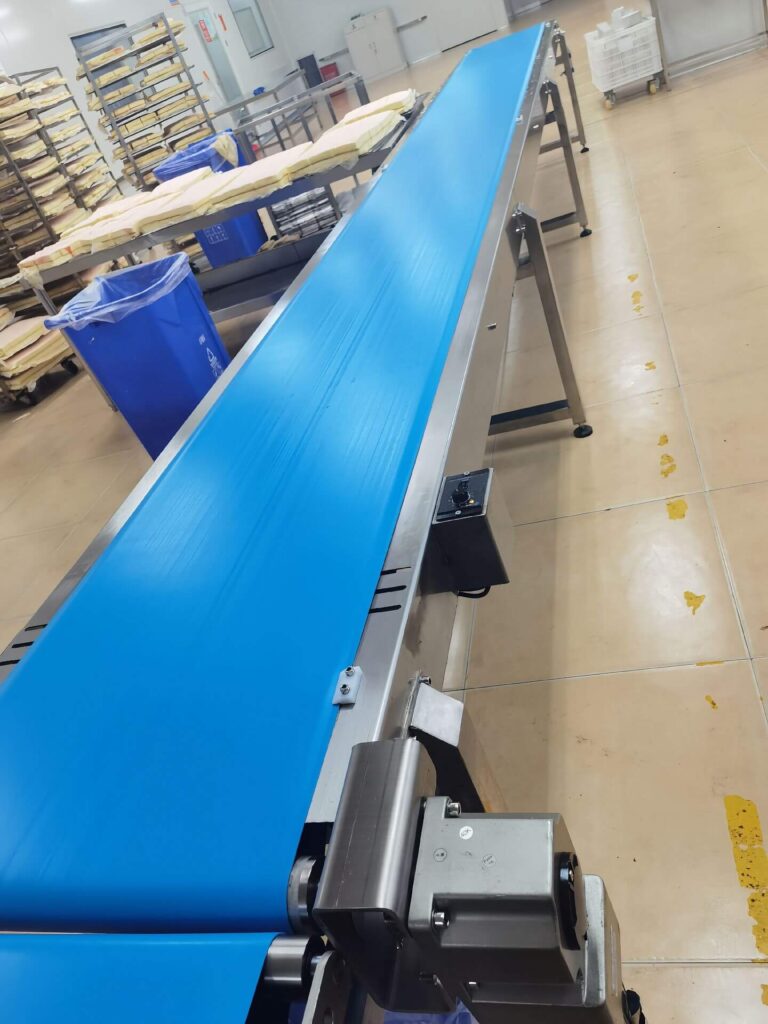
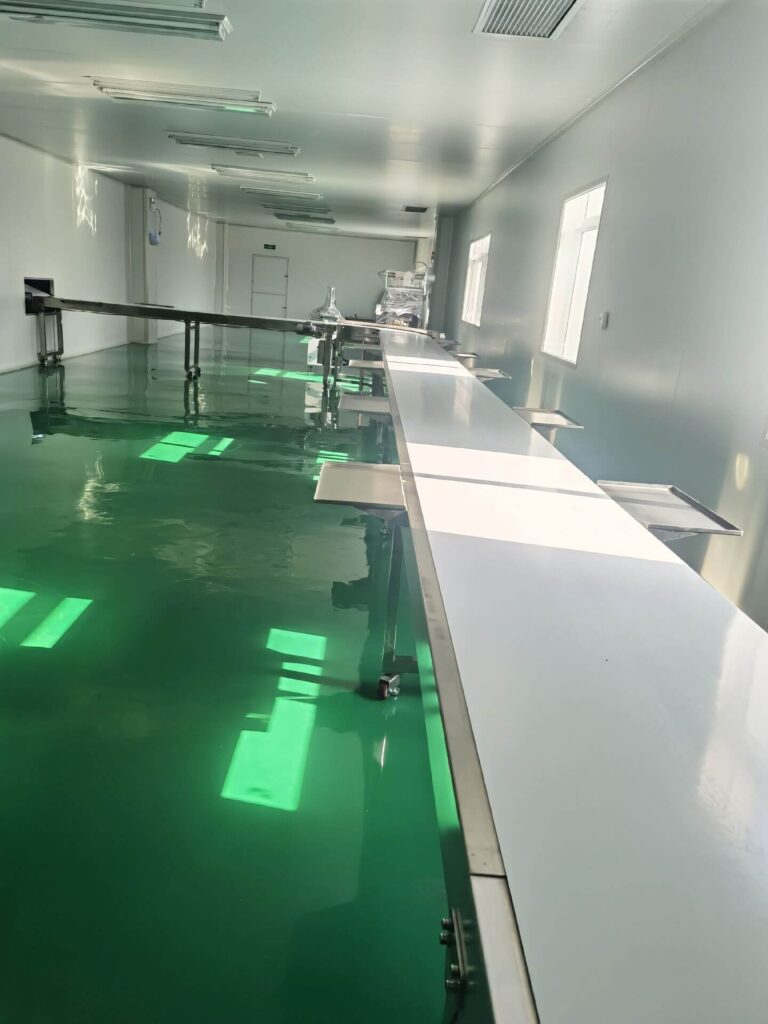
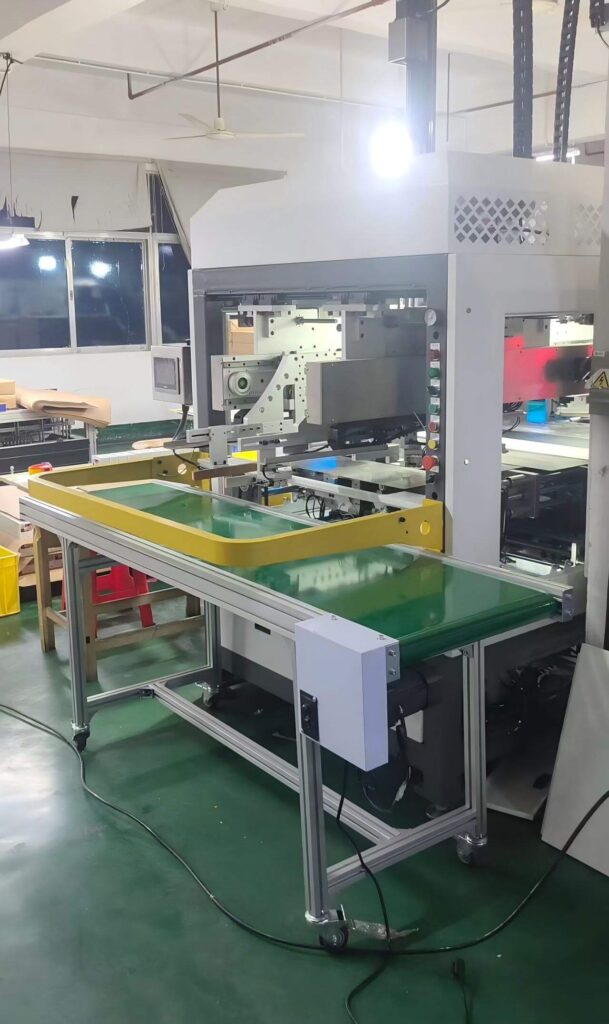
Frequently Asked Questions:
Contact Us