In industrial production and logistics, belt conveyors are a crucial component of continuous transport equipment. Their performance stability and efficiency directly impact the smoothness of the entire production line and cost control.
Bandwidth, as one of the core parameters of a belt conveyor, not only affects conveying capacity but also directly influences investment costs, operating energy consumption, and ease of maintenance.
Therefore, scientifically and rationally selecting the belt conveyor bandwidth is key to ensuring efficient system operation.
Influence of Material Characteristics
Particle Size and Shape: The particle size and shape of the material are the primary factors determining the belt width. Large or irregularly shaped materials require wider conveyor belts to prevent rolling or jamming during transport, ensuring the continuity and stability of the conveying process.
For example, for large materials such as ores and coal, the belt width selection must fully consider the maximum particle size and distribution of the material. It is generally recommended that the belt width be at least three times the maximum particle size of the material.
Material Density and Moisture Content: The density and moisture content of the material also affect the belt width selection. High-density materials require a larger carrying area for the same conveying capacity, thus potentially requiring a wider conveyor belt; while high-moisture materials may require a larger belt width due to increased adhesion to reduce the risk of material accumulation and blockage.
Material Flowability: Materials with poor flowability, such as powders or sticky materials, easily accumulate on the conveyor belt, affecting conveying efficiency. For these materials, in addition to considering increasing the belt width, appropriate cleaning devices and tilt angle designs are also necessary to improve material flowability and reduce residue.
Considerations for Conveying Capacity Requirements
Conveying Capacity Calculation: Determining the required conveying capacity of the belt conveyor is fundamental to selecting the belt width. Conveying capacity is typically measured in tons per hour (t/h) and requires precise calculation based on the actual needs of the production line. The calculation must consider factors such as material density, conveying speed, and the conveyor belt’s fill factor.
Relationship between Belt Width and Conveying Speed: For a given conveying capacity, belt width and conveying speed are inversely proportional. Increasing the belt width reduces the required conveying speed, thus reducing material wear on the conveyor belt and energy consumption; conversely, decreasing the belt width requires increasing the conveying speed to meet the conveying capacity requirements, which may increase operating costs and maintenance complexity. Therefore, when selecting the belt width, conveying capacity, conveying speed, equipment lifespan, and operating costs must be comprehensively considered.
Peak Conveying Capacity: In addition to the average conveying capacity, peak conveying capacity during the production process must also be considered. Ensuring stable operation of the belt conveyor during peak periods avoids material accumulation or system overload due to insufficient belt width.
Spatial Layout Constraints
Installation Space: The installation space for the belt conveyor is a crucial factor that cannot be ignored when selecting the belt width. In limited space, an excessively wide conveyor belt can lead to difficulties in equipment layout or even prevent installation. Therefore, when selecting the belt width, the site’s spatial conditions must be fully considered to ensure smooth installation and sufficient maintenance space.
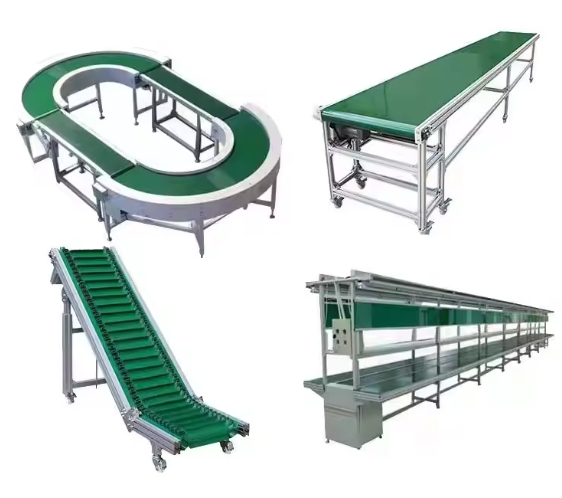
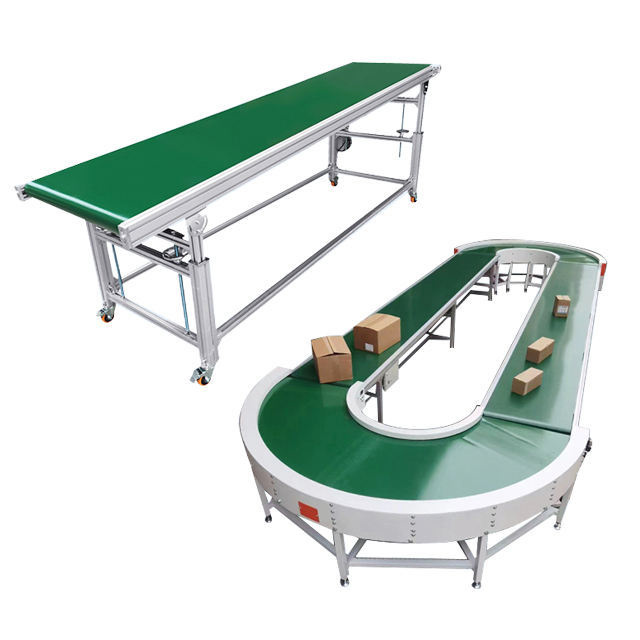
Turning Radius: For belt conveyors requiring turns, the belt width selection must also consider the turning radius limitation. An excessively wide conveyor belt may cause material spillage or belt misalignment due to centrifugal force during turns. Therefore, the belt width must be selected reasonably based on the turning radius to ensure the smoothness of the conveying process.
Inclination Angle: When conveying at an incline, the belt width selection must consider the stability of the material on the conveyor belt. As the inclination angle increases, the risk of material slippage increases, which may require increasing the belt width or adopting anti-slip measures to ensure stable material conveying.
Comprehensive Economic Evaluation
Initial Investment Cost: Increasing the belt width directly leads to an increase in the cost of components such as the conveyor belt, drive unit, and rollers. Therefore, a cost-benefit analysis must be conducted when selecting the belt width to ensure that the initial investment matches the expected returns.
Operating Energy Consumption: The choice of belt width also affects the equipment’s operating energy consumption. Excessively wide conveyor belts may increase the load on the drive unit, leading to increased energy consumption; while excessively narrow conveyor belts may increase friction loss and energy consumption due to excessively high conveying speeds. Therefore, it is necessary to minimize energy consumption by optimizing the combination of belt width and conveying speed.
Maintenance Costs: The selection of belt width must also consider the equipment’s maintenance costs. Excessively wide conveyor belts may increase the difficulty and frequency of cleaning